
Booking a business hotel in the United States means navigating a vast country with wildly different city dynamics - from mid-sized regional hubs like Cleveland and Baltimore to remote destination cities like Ketchikan, Alaska. This guide covers five properties across different states, helping corporate travelers make informed decisions based on location, connectivity, and work-relevant amenities rather than marketing language.
What It's Like Staying in the United States for Business
The United States covers over 3.8 million square miles, meaning "staying in the US" can mean anything from a downtown Baltimore neighborhood to a coastal Alaskan port city. Business travelers need to account for this geographic scale when planning - regional airports vary enormously in connectivity, and ground transport between cities is rarely practical. Domestic flight networks are the backbone of US corporate travel, with hubs like Chicago O'Hare, Atlanta, and Dallas-Fort Worth connecting most secondary markets efficiently.
Urban density in US cities is uneven: cities like Baltimore and Cleveland have compact downtown cores surrounded by sprawling suburban areas, while Ketchikan operates almost entirely as a walkable waterfront town. Crime rates and nighttime safety vary sharply by neighborhood, and business travelers should verify proximity to commercial districts before booking. Around 70% of US business travelers prioritize free parking or airport proximity when selecting properties outside major metros.
Pros:
Extremely diverse city-by-city infrastructure, allowing tailored stays based on specific business needs
Most mid-tier and above US hotels include free WiFi, parking, and 24-hour reception as standard
Domestic air connectivity makes multi-city business trips highly manageable with short layovers
Cons:
Public transport between airports and hotels is unreliable in most mid-sized US cities - rental cars or rideshares are often necessary
Hotel pricing spikes sharply during local conventions or sporting events, with little advance warning in some markets
Room size and quality vary significantly between urban cores and suburban or highway-adjacent properties
Why Choose a Business Hotel in the United States
Business hotels in the US occupy a clearly defined tier between budget motels and full-service luxury properties. In mid-sized cities like Xenia, Ohio or Clinton, Iowa, a 3-star business-oriented property typically costs around $80-$120 per night and delivers practical amenities - free parking, in-room microwaves, continental breakfast - that luxury urban hotels often charge extra for. The value-to-functionality ratio at US regional business hotels is consistently high compared to coastal metro markets.
What differentiates dedicated business hotels from standard US accommodations is the emphasis on friction-free stays: 24-hour front desks, copy and fax services, fitness centers, and in-room workspaces are standard rather than optional. In cities like Ketchikan or Baltimore, proximity to convention centers, universities, or government facilities is a defining booking factor. Room service and airport transfers - often absent in budget US properties - appear in business-tier hotels and matter significantly when arriving late or leaving early.
Pros:
Free parking is standard at most US regional business hotels, eliminating a cost that runs around $40 per day in major metros
In-room refrigerators, microwaves, and coffee machines reduce reliance on expensive hotel dining for multi-night stays
24-hour front desks and business centers support non-standard working hours common in corporate travel
Cons:
Business hotels in suburban or highway locations often lack walkable dining or evening options, requiring a car for every meal
Continental breakfasts at budget-end properties are often minimal - useful but not a replacement for a full meal before long meetings
Fitness centers at lower-tier properties vary widely in equipment quality and hours
Practical Booking & Area Strategy for Business Travel in the US
City selection matters more than hotel brand when booking business accommodation in the US. Baltimore offers strong positioning for travelers working with University of Maryland, federal agencies, or port-adjacent industries, with Baltimore-Washington International Airport just 15 km from the downtown core. Ketchikan, Alaska, while remote, serves as a critical stop for maritime, tourism, and government contractors operating in Southeast Alaska - and The Landing Hotel is one of the few full-service options in the area. For Ohio-based corporate trips, Xenia sits within 15 miles of both Wright-Patterson Air Force Base and Central Dayton, making it a practical base for defense sector and government work without downtown Dayton pricing.
Clinton, Iowa provides access to Quad Cities - a regional manufacturing and logistics hub - at a fraction of the cost of booking directly in Davenport or Moline. Cleveland, Mississippi (not Ohio) is a Delta region hub relevant to agricultural business, education, and regional government work. Book at least 3 weeks ahead if your travel dates overlap with university events, air shows at Wright-Patterson, or cruise season in Ketchikan (May through September), when regional inventory tightens quickly.
Business Hotels in the US Midwest & Mid-Atlantic
These properties serve business travelers operating in the Mid-Atlantic corridor and the Midwest's industrial and agricultural regions - markets where free parking, reliable WiFi, and proximity to key institutions outweigh luxury amenities.
-
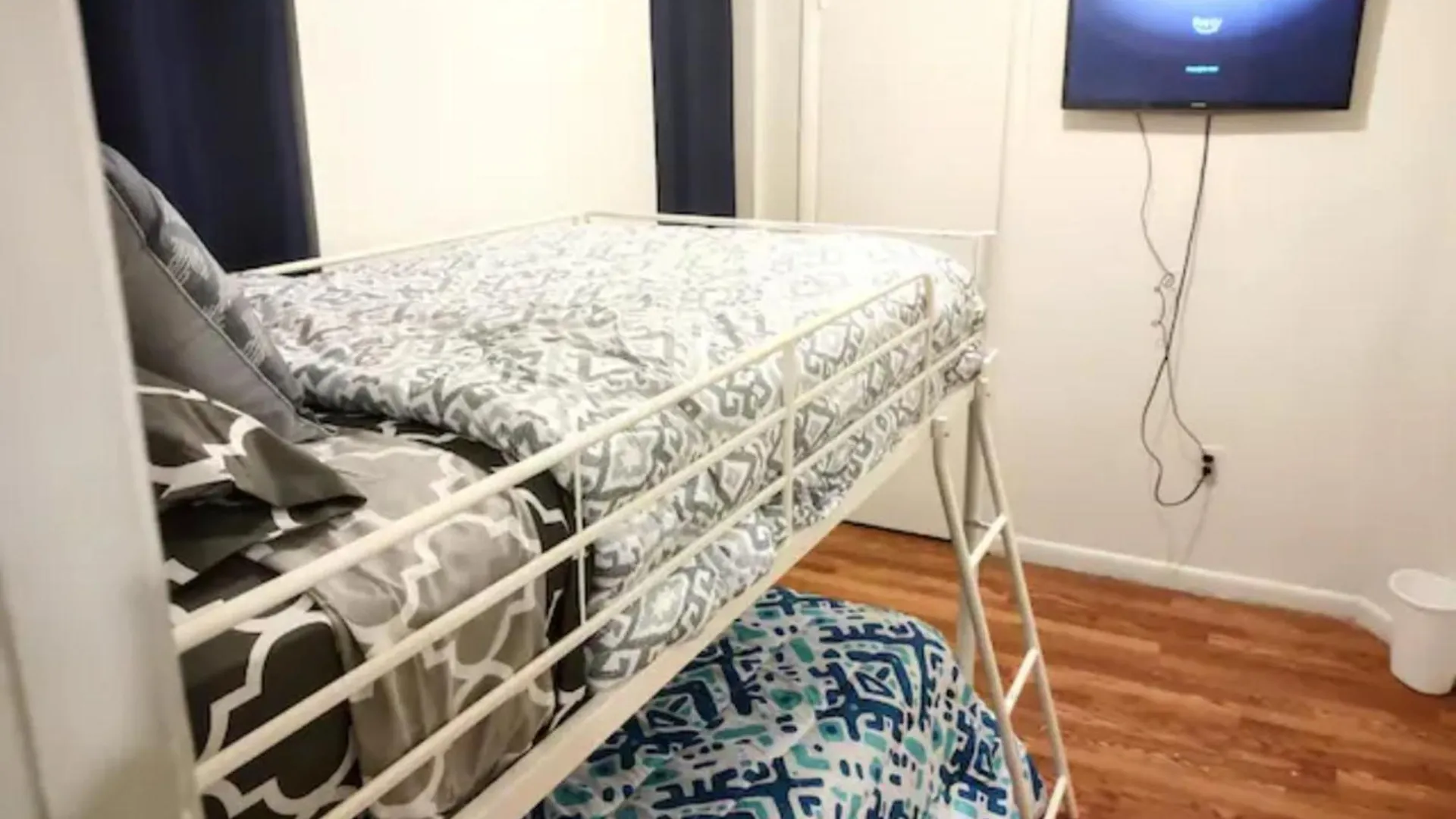
1. Twin Bunk-Style Bedroom Close To Downtown
Show on map


 Check-infrom 15:00 until 23:59Check-outuntil 11:00
Just a few rooms left at the best rate!
fromUS$ 40
- Show on map
Best price guarantee
-
3. Deerfield Inn
Show on map


 Check-infrom 15:00 until 23:59Check-outuntil 11:00
Just a few rooms left at the best rate!
fromUS$ 65
-
4. Travelodge By Wyndham Clinton Valley West Court
Show on map


 Check-infrom 16:00 until 23:59Check-outuntil 11:00
Hurry – almost gone at this price!
fromUS$ 175
Business Hotels in Remote & Destination US Markets
For business travelers working in Alaska or other non-contiguous US markets, full-service hotel options are limited - making advance booking and amenity verification critical before arrival.
-
5. The Landing Hotel
Show on map


 Check-infrom 15:00 until 23:59Check-outuntil 11:00
Rooms filling fast – secure the best rate!
fromUS$ 150
Smart Travel & Timing Advice for US Business Hotels
Timing business travel in the US requires city-level awareness rather than national seasonal patterns. In Ketchikan, cruise season runs May through September, driving hotel occupancy above 90% and pushing rates significantly higher - business travelers visiting during this window should book at least 6 weeks in advance. Baltimore sees pricing pressure during federal government conference cycles and Johns Hopkins-related events, particularly in spring and fall. Xenia and Clinton are lower-demand markets where last-minute booking is generally viable, though Wright-Patterson Air Force Base air shows in late summer can briefly tighten local inventory.
For multi-city US business trips, anchoring in a mid-sized regional hub and using day trips or short domestic flights to surrounding areas reduces hotel costs substantially compared to booking in major metros. Monday through Thursday nights carry the highest business hotel rates in most US cities; arriving Sunday and departing Friday can reduce per-night costs by around 25% in markets like Baltimore and Cleveland. Properties offering free continental breakfast and parking - like Deerfield Inn - deliver meaningful savings on week-long stays where those costs would otherwise accumulate daily.


